
The Right to Change Your Mind
Have you ever outgrown a rule you used to swear by? Could be time to reconsider some choices. Plus: the man who broke into jail, Tokyo, and Toothsome party at Cafe Kowloon
Good morning. Let’s talk about what happens when the thing that was supposed to save your gut, brain, skin and sanity… stops working. A food rule, a supplement routine, a way of eating that was once evangelised that no longer delivers on its promise.

You might have been vegan for fifteen years but now want to try something new - you can. Or maybe you’re going the other way and want guidance around eating less meat. That works too. You can be pescatarian. Vegetarian. You can reconsider alcohol, sugar, fasting, carbohydrates, protein bars, coffee.
Food choices aren’t permanent identities. They’re fluid, situational, seasonal. They’re choices we make in a particular chapter of life. And just because you’ve always done something doesn’t mean it’s still the right choice for you now.
The world of wellness can be so preachy and dogmatic. It acts like our food choices are our entire identity. And if you dare to eat something you once swore off, or change your stance on fasting, or say you’re not feeling great on oat milk anymore - it’s betrayal. Eh. Come on now. I think we need to rethink that logic.
Because one of the key tenets of being well is being adaptable. Flexible. Having the right to change your mind is a big part of that.
Change is needed for many reasons. Maybe you’re feeling low energy. Digestion is weird. Poor concntration. Wild sugar cravings. Or maybe your relationship with food has become far more complicated than it needs to be? That’s a big one.
Sometimes getting the results from your blood or stool tests is the springboard. Sure, they don’t tell the whole story and they aren’t a DIY diagnosis kit but they can help point you toward what deserves attention, things like iron status, B12, or blood glucose markers.
Whatever your reason, the pull towards change is there. So how do we do it?
Curiosity is a good place to start.

Let’s separate the story from the physiology.
Food carries a lot of meaning for people. I know it does for me. It’s part of our culture, it plays a role in aesthetics, it’s proof we’re doing the “right” things. It shapes the stories we tell ourselves about who we are and what we’re capable of - and those stories can get very fixed. Let’s ask some questions.
Here are some examples of things that have come up in my practice and how we approached it:
“I’ve always been a vegetarian.”
Is it because you were raised this way? Does raw meat gross you out?
“I never eat carbohydrates at night.”
Did this start with a diet a long time ago? Is it associated to when you experienced IBS and this seemed to help?
“An espresso after dinner doesn’t affect me.”
Is this part of your culture? Is it tied to the rhythm of late dinners out?
When we approach our choices with curiosity it helps unburden some of the tricky hangups we have about why something has to be the way it is and we can get closer to a small change that might make all the difference.
For example, if it’s ethics that’s stopping you from eating meat, we can optimise plant-based options - animal products aren’t the only way to solve low ferritin or B12. Yes, you’ll need to allocate a bit more time to prep, be super intentional with getting nutrients in regularly and be comfortable with the fact that you may need to repeat proteins but it’s all worth doing if having animal products makes you feel unhappy. Or is it the squeamish bit?
Try outsourcing the prep or go for pre-cooked. You can still make a change but it might not be as a severe as you think it needs to be.
A lot of food rules weren’t born from science- they started with a feeling, a phase, or something you overheard on a podcast five years ago. That’s allowed. But it also means you can update them.
How to make a change without torching your kitchen
Here’s what I often walk clients through.
1. Name the friction
What’s actually bothering you? Not the vague “I want to eat better” but the specific bit: low energy at 4pm? Finding it hard to fall asleep? Ravenous at night? Pick one. That’s your starting point.
The clearer you are, the more useful your experiment will be.
2. Zoom out from the label
Say it with me: your diet is not your personality. “Paleo,” “fasting,” “low FODMAP,” – these are tools, not who you are. You are a whooooooole lot more interesting than that, I guarantee it.
Step back and look at the shape of your week. What are you actually eating, skipping, over-relying on, or avoiding altogether? That’s more valuable than any label.
3. Make the data useful, not scary
Blood work can offer insight but it’s a snapshot, not locked in stone. “Normal” also doesn’t always mean optimal.
Get tested, discuss with a health professional, and approach supplements with caution. Low iron doesn’t mean you need to go out and start taking a high dose iron supplement, you might end up with more trouble than you expected (starting with constipation).
4. Run an experiment
You don’t need to swing from lifelong vegan to carnivore eating steak on a chopping board. Take it easy. Most of the time, a small specific nudge can get you there - maybe it’s a just adding 15g more protein to your breakfast or a change in meal timing.
Re-introducing a long-avoided food should be done without urgency - we’re trying to gather information not win a wellness medal (no such thing btw).
Try something for 3 days and really pay attention to what changes happen. Adjust from there.
One last thing.
Be wary of anyone selling certainty. That’s always a red flag to me. Rules packaged as universal truths tend to ignore the basics: stress, sleep, hormones, age, digestion, medical history - and the fact that life changes.
And voices of influence insisting there’s only one right way to eat is reductive and risky. It discourages people from tuning into their own bodies, which really matters, especially when so many of us are outsourcing our instincts to wearables.
Clinging to old food rules can keep you stuck in someone else’s story. Real discernment means you get to change your mind, without thinking it changes who you are. Any judgment you think you’ll face? Probably imagined. And even if it isn’t - who cares. When you’re feeling happy and healthy, everyone wins.
I’d love to know: what’s a food rule you once followed that you’ve since ditched - and felt better for it? Tell me.
What’s fed me
It’s not just food. Everything you take in shapes how you think and feel. Here’s what I’ve been up to that’s nourished my creative brain:

The Man Who Broke into Jail by James Verini. I read this piece about Alexander Friedmann, a criminal-justice activist who, years after serving time, started sneaking back into a private prison - posing as a construction worker to stash weapons in the walls. It’s a layered story about protest, obsession, and the line between justice and crime. Had me gripped!


Lost in Translation (dir. Sofia Coppola, 2003). Life has been full lately, with new and exciting/exacting demands coming in at a rapid pace. When it gets like this, my boyfriend and I return to the classics. We rewatched Lost in Translation - it’s twenty three years old (how?) - and still feels like a cool cloth on the nape of the neck. Exhale.
It also reminded us that we’re due another trip to Tokyo. Last time we were there, it was a fleeting trip for his exhibition and it was smack in the middle of a heat wave. Next time I want to aim for slower, cooler and longer.
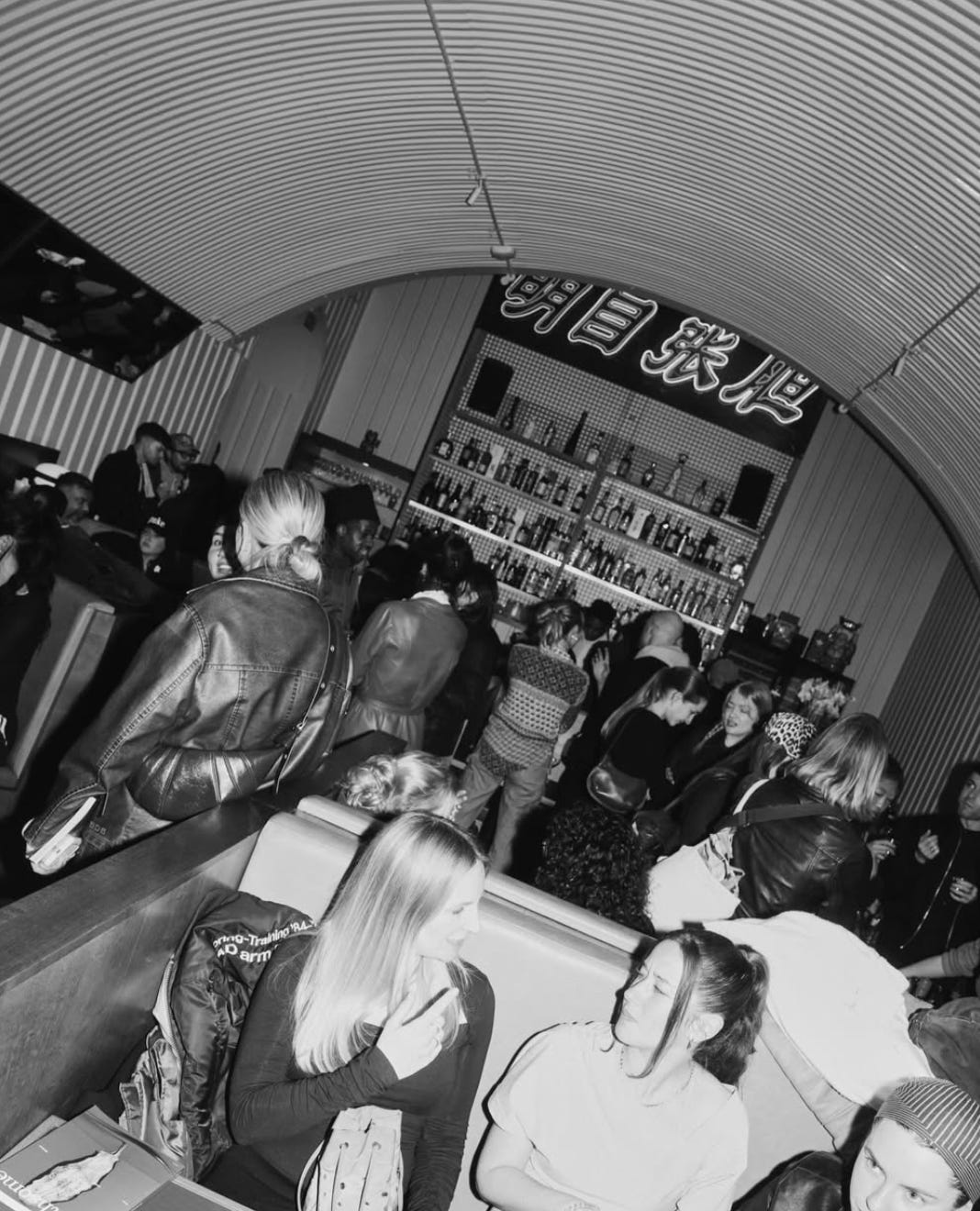
Toothsome Magazine Issue 2 Launch. My friends DK & Ashley launched the next issue of their magazine at Cafe Kowloon, the perfect setting for this issue’s theme: From Minimal to Maximal. The party was poppin. Warm faces everywhere. Go get your copy.
Vegan to vegetarian to pescatarian to eating meat again… :)